

Geyser Maintenance Checklist for Pretoria Homeowners
A geyser maintenance checklist Pretoria 2026 homeowners should follow is shorter than most people expect, but the tasks that appear on it carry significant consequences if skipped. A well-maintained 150L electric geyser in Pretoria can last 10 to 14 years. The same unit without any maintenance typically fails between year 5 and year 8. In a city where Tshwane water shedding and hard water from the Roodeplaat Dam place extra stress on geyser components, the gap between a maintained and an unmaintained unit is even wider.
This guide gives you the complete checklist, explains what each task does and why it matters in Pretoria specifically, and shows you which tasks you can handle yourself and which need a PIRB-registered plumber.
Geyser Maintenance Checklist Pretoria 2026
Use this table as your annual reference. Print it, photograph it, or bookmark this page. The checkbox column is for you to mark off each task as it is completed or confirmed by your plumber.
| Check / Task | Frequency | DIY or Plumber |
|---|---|---|
| Visual inspection — tank, drip tray, pipework | Monthly | DIY visual check |
| Overflow pipe check — continuous drip | Monthly | DIY — call plumber if flowing |
| Thermostat temperature setting | Seasonal | DIY — confirm 60°C |
| PRV (pressure valve) test | 6 months | DIY — lift lever briefly |
| Vacuum breaker & isolator valve | Annual | PIRB plumber recommended |
| Element inspection & descaling | Annual | PIRB plumber required |
| Anode rod inspection | Annual | PIRB plumber required |
| Tank flush — sediment removal | Annual | PIRB plumber recommended |
| Geyser blanket check | Annual | DIY visual check |
| Full service with report | Annual | PIRB plumber required |
What Each Task Does and Why It Matters in Pretoria
Monthly visual inspection
Once a month, open the ceiling hatch or access panel near the geyser and spend sixty seconds looking. You are checking for moisture in the drip tray, any rust staining on the tank body or pipes, and whether the overflow pipe is actively discharging water rather than the occasional drip.
Catching a slow leak at this stage costs R500 to R900 to fix. The same leak discovered after it has saturated ceiling boards and damaged cornices costs R8,000 or more in combined plumbing and builder repairs.
Overflow pipe check
A small amount of water dripping from the overflow pipe during and after the geyser heating cycle is normal. The PRV discharges water as pressure builds during heating. What is not normal is water flowing continuously or discharging hot steam. Continuous flow means the PRV is faulty or the thermostat is set too high. This needs a plumber within 24 hours.
Thermostat temperature setting
Kwikot and most South African geyser manufacturers recommend setting the thermostat to 55 degrees Celsius in summer and 60 degrees in winter. At 60 degrees, the water is hot enough to inhibit legionella bacteria growth while not overworking the element or PRV. Thermostats set above 65 degrees waste electricity and increase PRV discharge frequency, which shortens valve life.
In Pretoria, where Tshwane water shedding can cause elements to run dry, a correctly calibrated thermostat is one of the few protections against overtemperature damage during a water supply interruption.
PRV manual test
The pressure relief valve has a small lever on the side. Lift it briefly to allow a cup of water to discharge, then release. This confirms the valve is not seized. A PRV that will not move when lifted is a blocked valve and a safety hazard. It needs immediate replacement. This test takes ten seconds and should be done every six months.
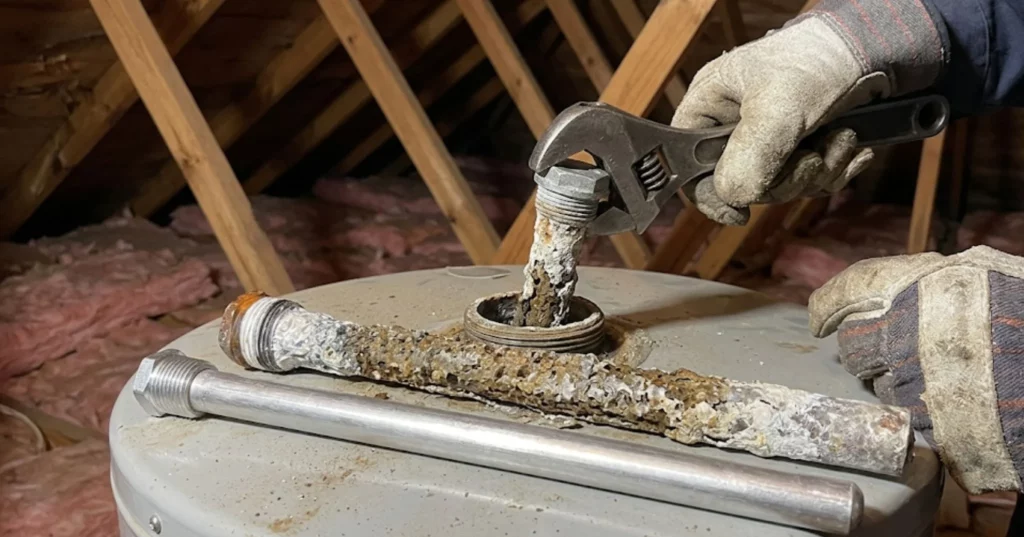
The Anode Rod — The Most Important and Most Overlooked Component
The sacrificial anode is a magnesium rod screwed into the top of the geyser tank. It corrodes in place of the steel tank lining. As long as the anode is intact, the tank is protected from internal rust. Once the anode is fully consumed, the water begins corroding the tank body itself.
This is not a theoretical risk. Every geyser warranty from Kwikot and other South African manufacturers requires the anode to be inspected and replaced at regular intervals. A burst geyser claim where the manufacturer inspects the unit and finds a fully consumed anode with no replacement history will almost always result in a rejected warranty claim.
A new anode must be fitted within the first 12 to 18 months of a new geyser installation. If the anode corrodes fully before inspection, its threads fuse to the tank and it cannot be removed without damaging the unit. Annual replacement is the only way to guarantee the thread remains accessible throughout the geyser’s service life.
Anode replacement is part of our annual geyser service in Pretoria. We carry replacement anodes for all common Kwikot, Franke, and Ariston units on every vehicle.
Book Your Annual Geyser Service in Pretoria
Full maintenance visit with written report. Covers element, anode, PRV and valves.
How Tshwane Water Shedding Changes Your Maintenance Schedule
A Pretoria homeowner who follows the standard South African geyser maintenance schedule may still experience premature element failure if they live in an area with frequent Tshwane water shedding and do not follow the correct outage protocol.
Each dry-running event, where the element heats without water around it, degrades the element faster than normal use. A Pretoria homeowner who has experienced three or more water shedding events per month should add an element inspection to their annual service, even if the element has been replaced recently.
The specific protocol for protecting your geyser during Tshwane water outages is covered in detail in our guide on geyser protection during Tshwane water shedding. A backup water tank eliminates the dry-running risk entirely and removes water shedding as a maintenance variable.
How Much Does an Annual Geyser Service Cost in Pretoria in 2026
A full annual geyser service by a PIRB-registered plumber in Pretoria, covering visual inspection, PRV test, vacuum breaker check, element inspection, anode inspection and replacement if needed, thermostat calibration, and a written service report, costs between R550 and R950 depending on whether replacement components are needed.
For comparison, a geyser element replacement after failure costs R800 to R1,500. An anode replacement on its own costs R350 to R650. A full geyser replacement because the tank corroded costs R7,500 to R10,500. The annual service cost is the cheapest item on this list by a significant margin. Full pricing is available on our Pretoria plumbing prices page.
Frequently Asked Questions
How often should a geyser be serviced in Pretoria?
Every 12 months for a standard inspection. Every 18 to 24 months for a full service including anode replacement in areas with soft water. Pretoria North and northern Centurion properties with hard Roodeplaat Dam water should service annually and replace the anode every 12 months. Properties that experience frequent Tshwane water shedding should add an element inspection to their annual service.
Can I check the geyser anode myself?
You can visually inspect the anode if it is accessible, but the removal and replacement requires a PIRB-registered plumber. The anode is under pressure and connected to live electrical components. It also requires the geyser to be drained before removal. Attempting DIY anode replacement without the correct tools and training risks both electrical injury and damage to the tank thread. The plumber also carries the right replacement rod for your specific unit.
Does geyser maintenance affect my home insurance?
Yes, in both directions. A documented annual service history strengthens your position when making a claim for water damage caused by geyser failure. Missing maintenance documentation can be used by an insurer to argue that the failure resulted from neglect rather than sudden accidental damage, which is typically excluded from cover. Ask your plumber to issue a written service report and file it with your home insurance documents.


