

Low Water Pressure in Pretoria: Causes and How to Fix It
Low water pressure in Pretoria in 2026 is one of the most common and most misdiagnosed plumbing complaints our team encounters. Some cases are a Tshwane network issue that no plumber can fix. Others are scale-blocked aerators that take five minutes to clean. And some are a failing pressure-reducing valve or a partially closed isolator that is quietly reducing flow to the entire property while the homeowner assumes the municipality is to blame. Knowing which one you have changes everything, including whether you need to call a plumber at all.
This guide walks you through a logical diagnosis by location, covers the Pretoria-specific causes that explain why this city sees more pressure complaints than most South African cities, and tells you exactly what each fix involves and costs.
Low Water Pressure Pretoria 2026: Start by Locating Where the Drop Occurs
Before doing anything else, answer one question: is the low pressure affecting one tap, one room, or the entire property? The answer narrows the cause immediately.
| Where Pressure Drops | What It Usually Means |
|---|---|
| One tap or showerhead only | Blocked aerator or showerhead. Easy DIY fix. |
| One room only | Partially closed isolator valve. Check and open fully. |
| Hot water only | Scale or geyser pressure valve issue. Plumber required. |
| Whole property, neighbours fine | PRV (pressure reducing valve) failure. |
| Whole property, neighbours same | Tshwane supply issue. Check service alerts. |
| Worse at peak times | Network pressure drop in high-demand areas. |
The Pretoria-Specific Causes That Make Pressure Problems Worse Here
Tshwane reservoir levels and Rand Water supply deficit
The City of Tshwane depends on Rand Water for the majority of its bulk supply. In 2026 the Hartebeesthoek, Klipriviersberg, and Brakfontein reservoirs that feed Pretoria’s distribution network have repeatedly operated at critically low levels. When reservoir levels drop, Tshwane reduces network pressure deliberately to extend supply duration. This affects higher-lying suburbs first and most severely.
Suburbs most affected by Tshwane supply pressure reductions in 2026 include Waterkloof Ridge, Faerie Glen, Montana, Annlin, Equestria, and elevated parts of Centurion. These areas sit at higher elevation and are served last when reservoir levels are insufficient to maintain standard distribution pressure.
Scale buildup from Roodeplaat Dam water
Pretoria’s water supply, particularly in northern and eastern suburbs fed from Roodeplaat Dam, has moderately high mineral content. Over time, calcium and magnesium deposits accumulate inside tap aerators, showerhead roses, geyser inlet valves, and washing machine inlets. The result is progressive pressure reduction that happens so gradually most homeowners blame the municipality before noticing that the kitchen tap flows normally while the shower is a trickle.
Cleaning a blocked aerator takes under two minutes. Unscrew the aerator tip from the tap spout, soak it in white vinegar for 30 minutes, rinse, and refit. If the pressure improves immediately, scale was the cause. If it does not, the restriction is further up the pipe.
Failing pressure reducing valves in pre-2000 properties
Most Pretoria residential properties built between 1985 and 2005 had pressure reducing valves installed at the municipal connection point. A PRV is designed to reduce incoming municipal pressure, which can be as high as 600 kPa in some Pretoria network zones, down to the 200 to 350 kPa range that household fittings are rated for. PRVs have a service life of approximately 8 to 12 years. A PRV that has failed in the closed direction progressively starves the entire property of pressure. A PRV that has failed in the open direction allows excess pressure that damages geysers, taps, and fittings.
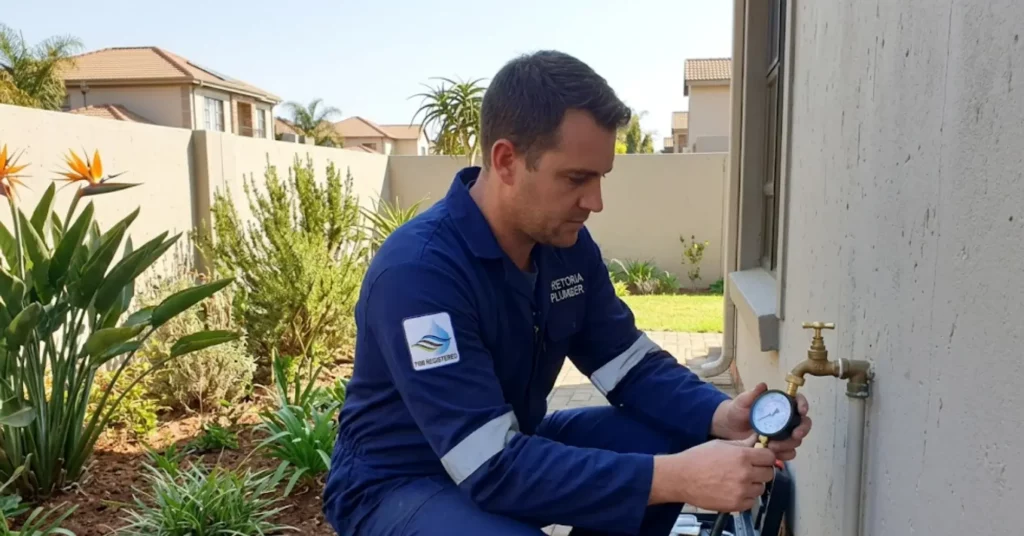
A PRV failure is straightforward to diagnose. A plumber attaches a pressure gauge to an outdoor tap connection and reads the dynamic pressure with water flowing. Normal household pressure is between 200 and 400 kPa. Below 150 kPa indicates a restricted PRV or supply issue. Above 600 kPa with no PRV in place indicates a missing or bypassed valve, which is a geyser and fitting risk.
The Four Most Common Fixes for Low Water Pressure in Pretoria
Fix 1: Clean aerators & showerheads
Cause: Mineral buildup
Fix: Soak in vinegar overnight
Fix 2: Open isolator valves
Cause: Valve partially closed
Fix: Turn anti-clockwise fully
Fix 3: Replace PRV
Cause: Faulty pressure valve
Fix: Replace (R800–R1,500)
Fix 4: Install booster pump
Cause: Low municipal pressure
Fix: Pump + tank system
Low Water Pressure Across Your Property?
We test your supply pressure before quoting. No guesswork.
When Low Pressure Is Actually a Hidden Leak
One cause of sudden whole-property pressure loss that homeowners frequently miss is an underground supply pipe leak between the Tshwane meter and the house. When a section of buried pipe fails, pressure bleeds off before it reaches any taps. The water simply disappears underground.
The diagnosis is the same fifteen-minute meter test covered in our water leak detection guide. If the meter digits move when every tap and appliance is off, water is flowing somewhere it should not be. A pressure drop combined with a positive meter test almost always indicates an underground supply leak rather than a network issue.
Our leak detection team in Pretoria uses acoustic equipment to locate underground pipe failures without excavating. The leak is marked and repaired with a precise trench rather than digging the full garden. Pricing for underground leak detection starts from R1,200 and is available on our Pretoria plumbing prices page.
How to Permanently Fix Low Pressure in High-Lying Pretoria Suburbs
If your suburb sits above the Tshwane distribution network’s comfortable service elevation, such as Waterkloof Ridge, Montana, Faerie Glen Ext 50 and above, or elevated parts of Annlin, the municipal supply will never consistently deliver the pressure a standard household expects. This is a geographic reality, not a fault.
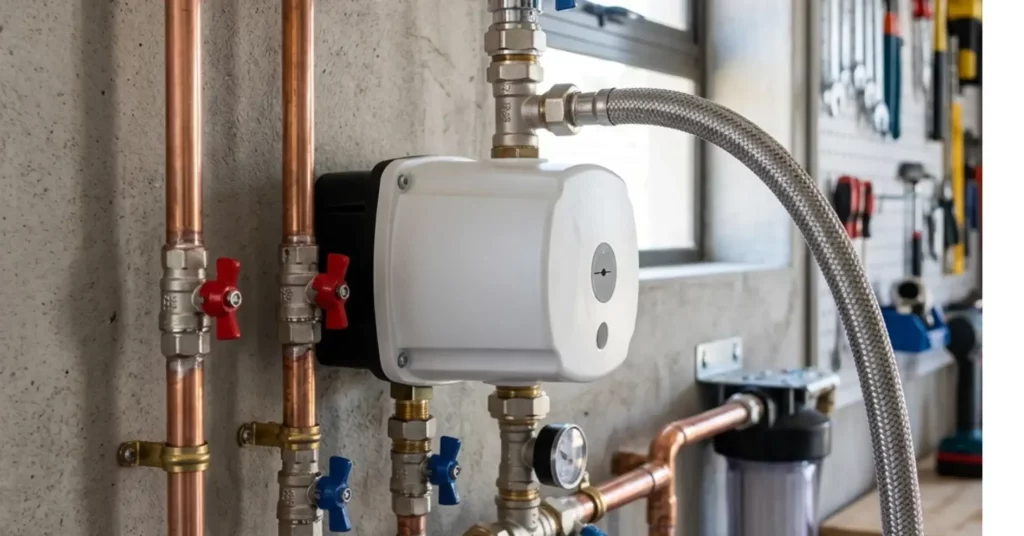
The permanent solution is a backup tank with a pressure pump. The tank fills slowly from the municipal supply at whatever pressure Tshwane delivers, and the pressure pump delivers it to your household at a consistent set pressure between 250 and 400 kPa regardless of network conditions. You never notice what the street pressure is doing.
A 2,500L JoJo tank with a pressure pump installed in Pretoria costs between R12,000 and R18,000. A 5,000L system runs R18,000 to R28,000. Both solve low pressure and water shedding vulnerability in a single installation. Our full water tank and backup system guide for Pretoria covers the full range of options.
Frequently Asked Questions
What is normal water pressure for a Pretoria home in 2026?
Normal household supply pressure in Pretoria is between 200 and 400 kPa at the point where the municipal connection enters the property. Most geysers, taps, and appliances are rated for this range. Pressure above 500 kPa puts strain on geyser fittings and tap washers. Pressure below 150 kPa makes showers unsatisfying, reduces geyser recovery time, and can cause appliances to fault. If you want an exact reading, ask a plumber to test it with a pressure gauge during a callout.
Can Tshwane legally reduce my water pressure?
Yes. The City of Tshwane has the right to manage network pressure as part of water demand management under the Water Services Act. Tshwane has used pressure reduction both as a conservation measure during high-consumption periods and as a reduced-service response to accounts in arrears. If your pressure has dropped and your account is current, the cause is almost certainly a network supply deficit rather than a deliberate restriction on your connection.
My pressure is fine during the day but drops at night. What causes that?
This is a demand pattern issue. During peak usage periods such as morning showers between 6am and 9am and evening cooking between 5pm and 8pm, the Tshwane network carries peak demand load. High-lying suburbs experience the most significant drops during these windows because gravity works against the network at elevation. A pressure booster pump with a storage tank eliminates this variation entirely by drawing from stored supply rather than directly from the network.
Should I fix low pressure myself or call a plumber?
A blocked aerator or a partially closed isolator valve are both homeowner fixes that require no tools beyond a cloth and a screwdriver. Everything else, including PRV replacement, pressure testing, booster pump installation, and hidden leak investigation, requires a PIRB-registered plumber. Attempting to adjust or replace a PRV without the correct pressure gauge and shut-off capability risks either flooding the supply line or damaging fittings throughout the property.


