

How to Protect Your Geyser During Tshwane Water Shedding
Most Pretoria homeowners know what load shedding does to a geyser. Far fewer understand that Tshwane water shedding, the scheduled cutting of municipal water supply, carries a completely different and in many ways more destructive risk to your hot water system.
Water shedding is not an electricity problem. No surge protector helps. No geyser timer helps. The risk is purely mechanical, and it causes more element burnouts and unexpected geyser replacements across Pretoria in 2026 than almost any other single cause.
This guide explains exactly what happens inside your geyser during a Tshwane water outage, what the protocol is before and after, and what the permanent solution looks like if you want to remove the risk entirely.
Why Water Shedding Is More Dangerous Than Load Shedding for Geysers
Load shedding cuts electricity. Your geyser sits idle, water stays in the tank, element stays submerged. When power returns, the element heats water that is still around it. Risk is relatively low.
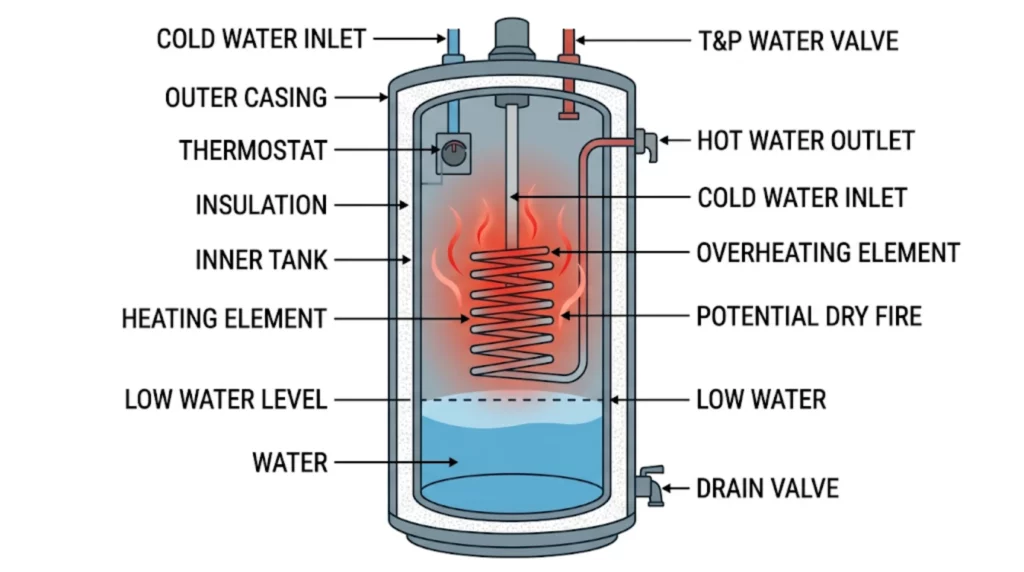
Water shedding cuts the water supply. If your geyser is left powered while you continue drawing hot water during the outage, the water level inside the tank drops. The heating element does not know this is happening. It keeps drawing current. Eventually the element sits in air rather than water.
An element designed to operate submerged will overheat within minutes when exposed to air. In the best case it burns out and needs replacement. In worse cases, the thermostat housing warps, the thermostat itself fails, or the thermal shock when cold water eventually re-enters the tank causes a crack.
It is the most common reason for unexpected geyser element failure we attend to across Pretoria and Centurion in 2026. Most homeowners have no idea the two events are connected until they are already looking at a repair bill.
What Happens Inside Your Geyser Step by Step
Understanding the sequence makes the protocol obvious. Here is what occurs during a typical Tshwane water outage when no action is taken:
Tshwane cuts the municipal water supply
The geyser tank contains a full load of heated water. The element is off, the thermostat is satisfied. Everything is fine at this point.
Household continues using hot water
Showers, washing up, cooking. Each draw reduces the water level in the tank. Cold water cannot refill from the mains because supply is cut. The tank level drops.
Thermostat triggers the element
As the remaining water cools, the thermostat calls for heat. The element switches on. If enough water has been drawn, the element is now partially or fully exposed to air.
Element overheats in air
The element was not designed to heat air. It overheats rapidly. The result is a burnt-out element, a tripped thermostat, or in severe cases, a failed thermostat housing.
Water supply resumes and thermal shock follows
Cold municipal water floods back into a hot, partially empty tank. The rapid temperature difference stresses the tank lining and fittings. Older geysers are especially vulnerable.
Protect Your Geyser Before the Next Tshwane Outage
We install water backup systems across Pretoria and carry out same-day geyser element replacements when the damage is already done.
The Before and After Protocol for Every Tshwane Water Outage
The protocol is simple. It takes thirty seconds. It prevents the entire sequence described above.
Before the outage
When a Tshwane water shedding notification is published for your area, whether via the City of Tshwane app, a community WhatsApp group, or a neighbour, go to your distribution board and switch the geyser circuit breaker to OFF.
This single action breaks the circuit between the mains and the element. The thermostat cannot call for heat. The element cannot overheat. Whatever happens to the water level during the outage, the element is completely safe.
During the outage
Conserve the hot water in your tank. The less you draw during the outage, the more water remains around the element when supply resumes and you switch back on.
- Use cold water where possible: hand washing, rinsing, dishes where hot water is not essential.
- Avoid long showers: a 10-minute shower can draw 60 to 80 litres of hot water from a 150L tank.
- Do not run the dishwasher or washing machine on hot cycles during a water outage.
When the water supply returns
Do not switch the geyser back on immediately. Follow this sequence:
- Open a cold tap and run it for two minutes. This flushes air from the supply line and confirms the mains pressure has stabilised.
- Check that the tank has refilled. You can hear water flowing back into the geyser through the supply pipe near the unit.
- Wait ten minutes after supply resumes before switching the geyser circuit back ON at the DB board.
- If the geyser trips immediately on switch-on, or if the hot water remains cold after two hours, the element may have been damaged before this protocol was in place. Contact a plumber.
What If You Were Not Home During the Outage
This is the most common scenario. The outage happens during the day, no one is at the property, and the geyser continues cycling normally while the tank slowly empties.
If you arrive home to cold water and the geyser is not heating, follow these checks before calling a plumber:
- Check the DB board: is the geyser circuit breaker still ON, or has it tripped? A tripped breaker is a sign the thermostat responded to an overtemperature condition.
- Reset the trip switch once: if the geyser heats normally after a reset and holds temperature, the thermostat caught the problem before element failure.
- If it trips again immediately: the element has likely failed and needs replacement. Do not keep resetting as this causes further damage.
- If the breaker is ON but there is no hot water: the element has burnt out and is no longer heating. This requires a same-day repair callout.
Our geyser repair team covers Pretoria, Centurion and Pretoria East for same-day element and thermostat replacements. Check the current geyser repair prices in Pretoria before calling. Element replacements start from R800 for parts and labour.
The Permanent Solution for Pretoria Homeowners
The protocol above works. But it requires you to be home, aware of the schedule, and disciplined every time. Tshwane has indicated that water shedding will remain part of the infrastructure management plan through at least 2027.
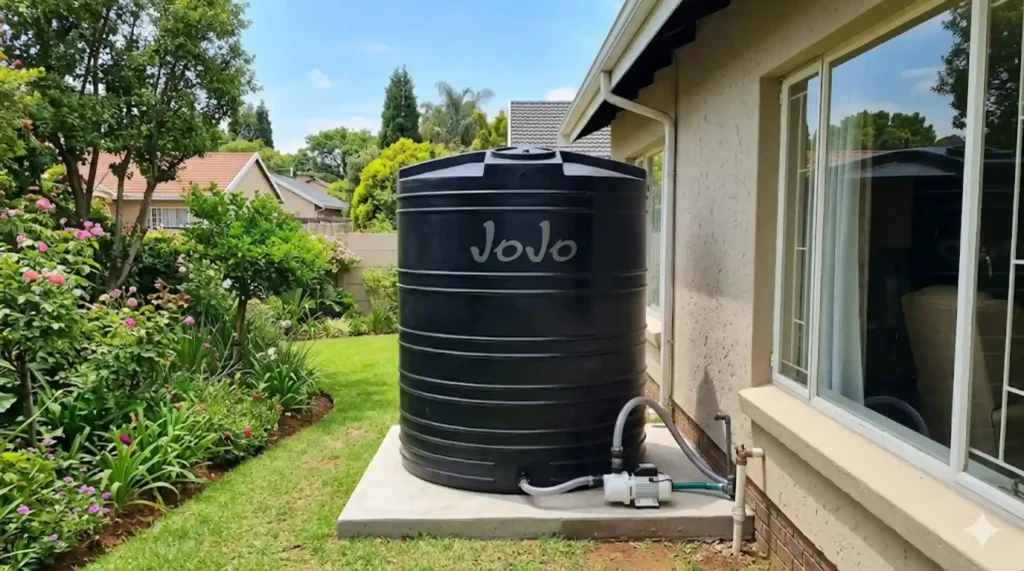
The permanent solution is a water backup tank. A properly sized and installed backup system maintains constant water pressure to your geyser from the stored tank supply, regardless of what the municipal network is doing. The geyser never sees an interrupted supply. The element is always submerged.
A 5,000L JoJo tank installation in Pretoria provides a household of four roughly 12 to 16 days of essential water supply. Read more about water tank installation options and costs in Pretoria.
The upfront cost of a 5,000L JoJo system in Pretoria ranges from R18,000 to R28,000 installed. Most Pretoria homeowners who have experienced two or more water-shedding related geyser failures in the same year report the tank paid for itself within eighteen months in avoided repairs.
One More Factor Specific to Pretoria
Tshwane municipal water has moderate to high mineral content in many suburbs, particularly in areas supplied from the Roodeplaat Dam. Hard water accelerates calcium scaling on the element. An element with scale buildup runs hotter than a clean element and is significantly more vulnerable to burnout during a dry-running event.
If your property is in Pretoria North, Wonderboom, Akasia, or northern Centurion suburbs, your element is statistically more prone to water-shedding damage. Annual element inspection as part of a geyser maintenance service in Pretoria removes scale buildup and extends the service life of the element significantly.
Already Suspect Your Element Has Burnt Out?
Element replacements in Pretoria start from R800 and are completed the same day in most cases.
WhatsApp or email us your suburb and a brief description. We will confirm the likely cause and cost before dispatch.
Frequently Asked Questions
Should I switch off my geyser for every Tshwane water outage?
Yes. Any outage long enough for your household to draw a significant amount of hot water creates element exposure risk. An outage of two hours where four people shower is enough to drop a 150L tank to a dangerously low level. The switch takes seconds and completely eliminates the risk.
My geyser worked fine after the last outage. Do I still need to worry?
Yes. A geyser that survives one or two dry-running events may have a degraded element that fails on the third. Scale buildup and general element age determine how quickly an overtemperature event causes permanent damage.
Is water shedding damage covered by my home insurance?
This depends on the specific wording of your buildings policy. Most policies cover sudden and accidental damage but exclude damage resulting from lack of maintenance or gradual deterioration. An element that burnt out due to a known risk that was not mitigated may be treated as a maintenance failure. Check your policy and consult your broker for clarity.
How do I know if the Tshwane water shedding schedule applies to my suburb?
The City of Tshwane publishes water interruption notices on the official Tshwane municipality website and through the e-Tshwane app. Most Pretoria suburb community Facebook and WhatsApp groups circulate notifications promptly when outages are scheduled.


