

How to Spot a Hidden Water Leak Before It Damages Your Pretoria East Home
Most hidden water leaks in Pretoria East homes go unnoticed for weeks sometimes months. By the time the damp patch appears on the wall or the ceiling board starts sagging, the pipe has already been failing long enough to saturate the structure behind it. The water bill climbed. The paint bubbled. And somewhere inside a wall cavity or under a concrete slab, a slow drip kept doing exactly what slow drips do.
This guide covers the specific signs that point to a hidden leak in a Pretoria East property, the checks you can do yourself before calling anyone, and when the problem has gone far enough that professional leak detection in Pretoria is the only way forward.
Why Hidden Leaks Are a Bigger Problem in Pretoria East
Properties in suburbs like Faerie Glen, Moreleta Park, Garsfontein, Equestria, and Silver Lakes Estate share a few characteristics that make hidden leaks more likely and more damaging than in newer developments. Many of these homes were built between the 1980s and early 2000s. The original copper and galvanised pipe runs are reaching the end of their service life, and Tshwane’s variable water pressure particularly noticeable during water shedding cycles puts extra mechanical stress on ageing fittings and joints.
Add the Highveld summer rainfall pattern to that picture. Water that enters a wall cavity during a storm is easy to confuse with a plumbing leak. The two problems require completely different repairs, and misidentifying one as the other wastes money and leaves the real fault in place. Knowing what you are actually looking for and what questions to ask is the difference between a targeted fix and a second callout six weeks later.
The Warning Signs You Should Not Ignore
Your water bill jumped without any obvious reason
A Tshwane water bill that increases by 20 percent or more between billing cycles without a corresponding change in household usage is one of the clearest early signs of a hidden leak. Most Pretoria East homeowners attribute this to neighbour-level Tshwane billing errors or estimate readings. Sometimes that is the cause. But if the higher bill persists into a second cycle, a leak is the more likely explanation.
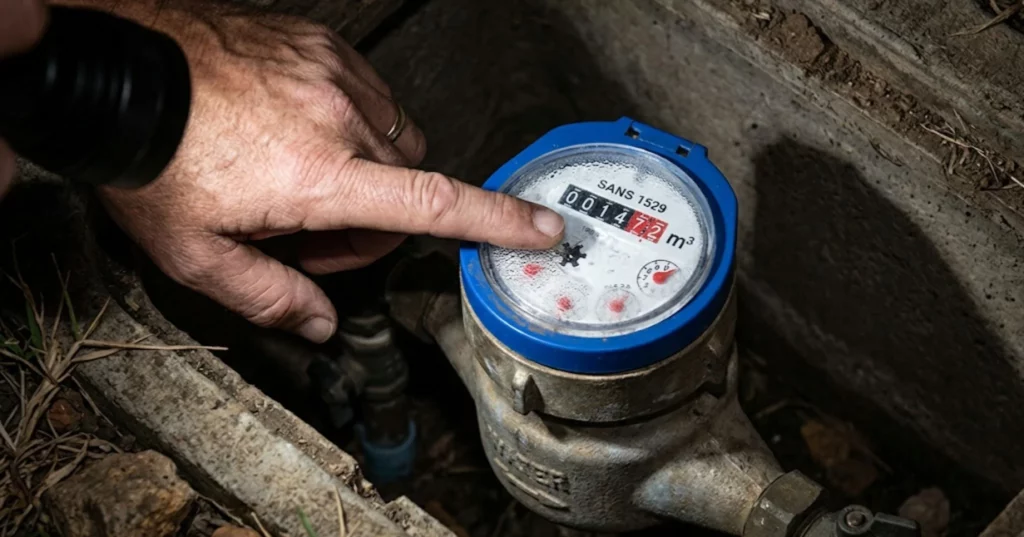
Check your meter at 10pm after the household has gone to bed. Make a note of the reading. Check it again at 6am before anyone opens a tap. If the dial has moved, water is leaving the system somewhere.
The water meter keeps moving with every tap closed
This is the most definitive home test. Turn off every tap, appliance, and irrigation line. Do not run a dishwasher or washing machine. Watch the meter for thirty to sixty minutes. If the meter is moving, you have an active leak between the meter and your boundary wall, or within the property itself. A leak on the municipal side of the meter is a Tshwane problem. A leak on your side is yours to fix.
Damp patches, bubbling paint, or mould that keeps coming back
Bubbling or peeling paint on an interior wall that has no external exposure is rarely a ventilation problem. In most Pretoria East homes it signals moisture in the wall cavity either from a concealed pipe or, in bathrooms, from a failed waterproof membrane behind the tiles. The tricky part is that visible moisture almost always appears some distance from the actual leak source. Water tracks down cavities and along pipe runs before finding an exit point at a corner, a skirting board joint, or a ceiling board seam.
Recurring mould growth in a room that gets adequate ventilation is another pointer. Mould needs sustained moisture. If the mould keeps coming back after surface treatment, the moisture source has not been removed.
Low water pressure in a specific part of the house
Pressure that drops at one fixture say, the shower in the main bathroom while the kitchen and en-suite run normally points to a restriction or a breach in that specific supply line. Whole-house low pressure is more likely a Tshwane supply issue or a pressure-reducing valve fault. Localised pressure loss is almost always the pipe itself.
This is also one of the earlier signals. A pipe that is corroding or cracking from the inside will reduce flow before it fails completely, giving you a window to investigate before the visible damage starts.
Warm or wet patches on a concrete floor
A hot water supply pipe that runs under the slab common in Pretoria East homes with single-storey layouts will warm the floor above the leak point when it fails. In cooler months this shows as a warm spot on the tile or screed that is present regardless of whether the underfloor heating is running. In summer it may be less obvious, but moisture at the surface or an unexplained damp smell from a specific floor area tells the same story.
Slab leaks are among the most expensive plumbing repairs if they are left to run. They erode the substrate, attack the concrete reinforcing, and can cause significant structural movement in older slab designs. Finding one early makes a substantial financial difference.
Ceiling stains or sagging boards in a room beneath a bathroom
Ceiling stains directly below a bathroom, toilet, or geyser cupboard are almost always plumbing related. The source is usually one of four things: a leaking toilet cistern connection, a cracked or failed shower tray drain, a geyser drip tray overflow, or a corroded pipe run inside the bathroom floor structure. The moisture tracks down until it reaches the ceiling board, which stains or in advanced cases softens and sags.
If you notice a ceiling stain that is not below a bathroom, the geyser is the next thing to check. A slow leak from the pressure relief valve outlet or the tank connections can run along the ceiling space for a considerable distance before becoming visible.
What to Check Inside and Outside the House
Toilets
A leaking toilet cistern is responsible for a larger percentage of unexplained water bill increases than most Pretoria homeowners expect. The test is simple: put a few drops of food colouring into the cistern and wait fifteen minutes without flushing. If colour appears in the bowl, the inlet valve or the flapper is passing water continuously. A running toilet can waste between 200 and 400 litres per day enough to meaningfully affect a Tshwane account.
Geyser pressure relief valve
The pressure relief valve on your geyser has a small copper outlet pipe that discharges into a drip tray or externally through the roof. Lift the tray cover or look at the external pipe outlet. A PRV that drips continuously is not normal it signals the system is running at unsafe pressure or the valve seal has failed. Left unaddressed, it can lead to a full geyser failure.
Our geyser repairs and installation team in Pretoria handles PRV replacements and pressure checks as a standalone service it does not require a full geyser replacement in most cases.
Irrigation and garden supply lines
In Pretoria East properties with automated irrigation, supply lines running through garden beds and under paving are a common source of undetected leaks. A zone that stays wet after a dry period, soft ground above a known pipe route, or a section of lawn that is noticeably greener than the rest of the garden are all indicators worth following up. These pipes are under constant pressure when the irrigation controller is active and the joints degrade with UV and root exposure over time.
When the Leak is Not Visible What Professional Detection Involves
A damp patch or an unexplained water bill movement tells you a leak exists. It does not tell you where. And in a Pretoria East property with tiled floors, plastered walls, and geyser pipework running through a ceiling cavity, the distance between the visible symptom and the actual leak source is often measured in metres rather than centimetres.
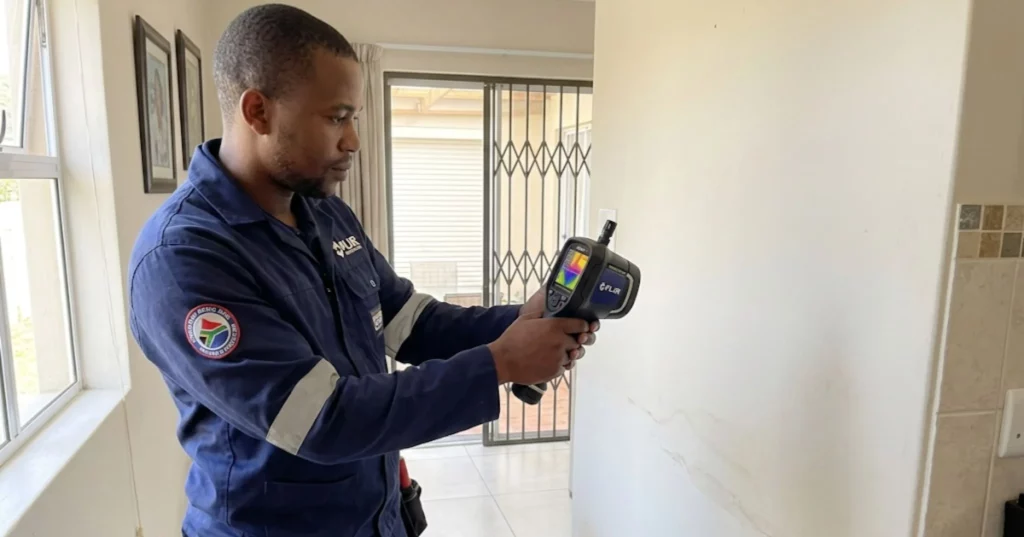
Professional leak detection removes the guesswork before any wall or floor is opened. Our team uses acoustic leak detection equipment to listen for the pressure signature of a leak through walls and concrete, thermal imaging to map moisture behind plaster and tiles without surface damage, tracer gas for underground and slab leak location, and moisture meters to confirm active saturation levels in specific wall or floor sections.
The result is a confirmed leak position marked, photographed, and followed by a written repair quote before any work starts. In a tiled bathroom or a property with a finished ceiling, this approach prevents the significant additional cost of opening surfaces at the wrong point.
For a full explanation of how the process works and what equipment is used across different leak types, see our detailed leak detection service page for Pretoria.
Found a Sign of a Hidden Leak in Your Pretoria East Home?
We locate the source without breaking walls, using acoustic, thermal, and tracer gas detection.
How Much Does Hidden Leak Detection Cost in Pretoria East in 2026?
Residential leak detection in Pretoria East is priced at a fixed rate confirmed in writing before the visit. Typical detection costs for a standard residential property run between R1,200 and R2,500 depending on the property size, the number of pipe circuits involved, and the detection method required. Pool leak detection is priced separately.
The more important cost comparison is detection versus a delayed response. A concealed leak in a wall cavity that runs for three months before being found can saturate timber elements, cause ceiling board failure, and create conditions for structural mould that costs five to ten times the detection fee to remediate. The full cost breakdown for Pretoria plumbing services in 2026 including call-out rates, leak detection fees, and repair costs is covered on our pricing page.
What Happens After the Leak is Found
Detection and repair are handled in the same visit where access to the pipe is straightforward an exposed fitting, an accessible ceiling space, or a visible joint behind a vanity. Where the repair requires opening a tiled surface, a plastered wall, or cutting into a concrete slab, the scope is quoted separately so you have a clear picture of the total cost before work proceeds.
All pipe repairs are carried out by PIRB-registered plumbers and comply with SANS 10252 standards. Where the repair constitutes a new installation or a significant modification to the supply system, a compliance certificate is issued on completion. This matters for your insurer a water damage claim following a repaired leak that was completed without a COC where one was required can be disputed or reduced.
If the leak has caused ceiling damage requiring board replacement, or wall damage that needs re-plastering, our emergency plumbing team in Pretoria can coordinate the sequence of trades so you are not managing a separate queue of contractors for what is ultimately one job.
Pretoria East Properties and the Case for a Plumbing Inspection
If your Pretoria East property was built before 2005, there is a reasonable chance the original supply pipework has not been inspected since installation. Copper pipe joints that were correctly sweated at the time develop micro-cracks under Tshwane’s variable supply pressure over fifteen to twenty years. Galvanised sections still found in some Faerie Glen and Garsfontein homes scale internally, reduce flow, and eventually fail at the thread joints.
A pre-emptive leak detection visit on an older Pretoria East property identifies weak points in the system before they fail under pressure. It is significantly less disruptive and less expensive than dealing with a ceiling collapse on a Saturday morning. If you are planning a bathroom renovation in Pretoria, the site inspection stage is the right time to check concealed supply lines before the walls are tiled.
Related Reading
If this article was useful, the following pages cover connected topics in more detail:
✅ How Much Does a Plumber Cost in Pretoria 2026 detection, repair, and call-out fees explained
✅ Emergency Plumber Pretoria 24/7 callouts for burst pipes, burst geysers, and active flooding
✅ Geyser Repairs and Installation Pretoria PRV faults, element failures, and full geyser replacement
✅ Bathroom Renovation Budget Pretoria 2026 what to prioritise and why plumbing comes first
Frequently Asked Questions
How do I know if I have a hidden water leak in my Pretoria East home?
The clearest early signs are a Tshwane water bill that has increased without any change in household usage, a water meter that moves overnight with every tap closed, damp patches or bubbling paint on interior walls, recurring mould in a ventilated room, and low pressure at one specific fixture. Any one of these on its own warrants a meter check. Two or more together warrant a professional detection visit.
Can I find a hidden water leak myself?
The meter test is something any homeowner can do turn everything off, read the meter, wait an hour, read it again. Toilet leak tests using food colouring are also straightforward. Beyond that, locating a concealed leak inside a wall cavity, under a slab, or in a geyser ceiling space without breaking the wrong surface requires thermal imaging, acoustic equipment, and tracer gas tools that professional detection technicians carry. DIY exploration at that point usually means opening walls in the wrong place and doubling the repair cost.
Does my home insurance cover hidden water leak damage in Pretoria?
Most South African home insurance policies cover resultant water damage from a sudden and unforeseen leak. They generally do not cover gradual damagemeaning a leak that has been running for an extended period without action taken. This is another reason early detection matters financially. Keep your detection report, the repair invoice, and the COC where one was issued. Your insurer will want all three when assessing a water damage claim linked to concealed pipe failure.
How long does professional leak detection take in Pretoria East?
A standard residential leak detection visit on a single-storey Pretoria East property takes between one and two hours from arrival to confirmed leak location. Properties with multiple bathrooms, slab-level supply pipes, or underground irrigation lines may require longer. We confirm the expected duration and the fixed detection fee in writing before the visit.
Suspect a Hidden Leak in Your Pretoria East Home?
We use acoustic, thermal, and tracer gas detection to locate leaks accurately — without opening the wrong wall.
📍 Serving Faerie Glen, Moreleta Park, Garsfontein, Equestria, Silver Lakes and surrounding areas.


