

Solar Geyser vs Electric Geyser vs Heat Pump for Pretoria Homes
Choosing between a solar geyser, an electric geyser, and a heat pump for your Pretoria home in 2026 is a straightforward decision once you look at the numbers honestly. The Highveld climate, Tshwane water shedding, ongoing load shedding, and rising Eskom tariffs create a specific set of conditions that favour one technology over the others for most Pretoria households. This guide lays out the comparison with real 2026 costs, Pretoria-specific performance data, and a clear recommendation based on your situation.
Solar Geyser vs Electric Geyser vs Heat Pump: The Full Comparison
Read this table first. It covers every practical factor for a Pretoria household in 2026.
← Scroll to see full table
| Electric Geyser | Solar Geyser | Heat Pump | Best for Pretoria? | |
|---|---|---|---|---|
| Installed cost (150L) | R7,500 to R10,500 | R18,000 to R28,000 | R25,000 to R38,000 | Electric for budget or emergency |
| Monthly running cost | R350 to R500 | R80 to R180 | R80 to R150 | Heat pump wins long term |
| Works during load shedding | No (needs electricity) | Yes (solar panels heat water) | Partly (needs power to run pump) | Solar for pure off-grid reliability |
| Pretoria winter performance | 100% reliable | 60 to 70% efficiency | 85 to 95% efficiency | Heat pump handles Highveld cold better than solar |
| Pretoria water shedding risk | High (element burns if tank empties) | Low (no element active during day) | Low (element rarely runs) | Heat pump or solar reduce dry-run risk |
| Payback period | No payback | 5 to 8 years | 3 to 5 years | Heat pump payback is fastest |
| COC required on installation | Yes | Yes | Yes | All three require PIRB registered installer |
| Service life | 8 to 12 years | 10 to 15 years (panel) | 10 to 12 years | Solar panel outlasts others if maintained |
| Recommended household size | Any | 3 or more | 2 or more | Heat pump suits most Pretoria homes |
On the Tshwane Block 2 electricity tariff in 2026, a 150L electric geyser running for a family of four costs approximately R1,170 per month. A heat pump running the same household costs approximately R350 per month. Over 12 months the difference is R9,840, which is nearly the entire cost of a geyser replacement.
Each System Explained for Pretoria Conditions
Each System Explained for Pretoria Conditions
The 150L ceiling-mounted electric geyser is what most Pretoria homes currently have. It heats water by passing electricity through a resistive element submerged in the tank. Simple, reliable, and low installation cost. The problem in 2026 is purely operational: it accounts for 30 to 50 percent of household electricity consumption. At current Tshwane tariffs, running an electric geyser for a family of four costs more over 5 years than a heat pump costs to purchase and install.
Best for: Emergency replacement when budget is the only constraint. Properties where the homeowner plans to sell within 18 months. Small single-person households with very low hot water demand.
Not ideal for: Households experiencing frequent Tshwane water shedding. Families of three or more paying full Tshwane electricity tariffs. Any homeowner planning to stay in the property for more than 3 years.
Installed cost Pretoria 2026: R7,500 to R10,500 supply and install with COC
A solar geyser uses flat-plate or evacuated-tube collectors mounted on the roof to heat water directly or via a heat-transfer fluid. Pretoria averages approximately 8.5 sunshine hours per day in summer, making it one of the best-performing solar geyser locations in South Africa. The challenge is Highveld winter. Between May and August, solar geyser systems in Pretoria typically achieve 60 to 70 percent of their summer efficiency. Most units include an electric backup element for low-radiation periods, which means you still use Eskom during winter months, though significantly less than a pure electric geyser.
Best for: Households with electricity already off the grid or investing in solar PV simultaneously. Properties without shade obstruction on a north-facing roof. Homeowners prioritising long-term sustainability over payback speed.
Not ideal for: Properties with heavy tree shade over the roof. Households in southern-facing townhouses in Centurion complexes where roof orientation cannot be optimised. Households expecting load-shedding to be solved short term.
Installed cost Pretoria 2026: R18,000 to R28,000 supply and install with COC. Requires structural assessment of roof
A heat pump extracts heat from ambient air using a refrigeration cycle and transfers it to the water in the storage tank. It uses approximately 60 to 70 percent less electricity than a standard electric geyser to produce the same hot water output. Crucially for Pretoria, heat pumps maintain high efficiency even when temperatures drop below 10 degrees Celsius on winter nights. The Highveld climate with its cold dry winters is well within the operating range of modern heat pump units. The system runs on electricity but uses it so efficiently that monthly running costs are comparable to solar geysers year-round, without the seasonal performance drop.
Best for: Families of two or more in Pretoria, Centurion, and Pretoria East. Homeowners replacing a geyser who plan to stay in the property for more than 3 years. Properties where roof orientation makes solar panels impractical. Any household paying Tshwane Block 2 or higher electricity tariffs.
Not ideal for: Rental properties where the landlord requires a lower-cost installation. Emergency replacements where time and budget do not allow a heat pump installation. Properties with very limited ventilated outdoor space for the unit.
Installed cost Pretoria 2026: R25,000 to R38,000 supply and install with COC. Unit requires adequate outdoor ventilation.
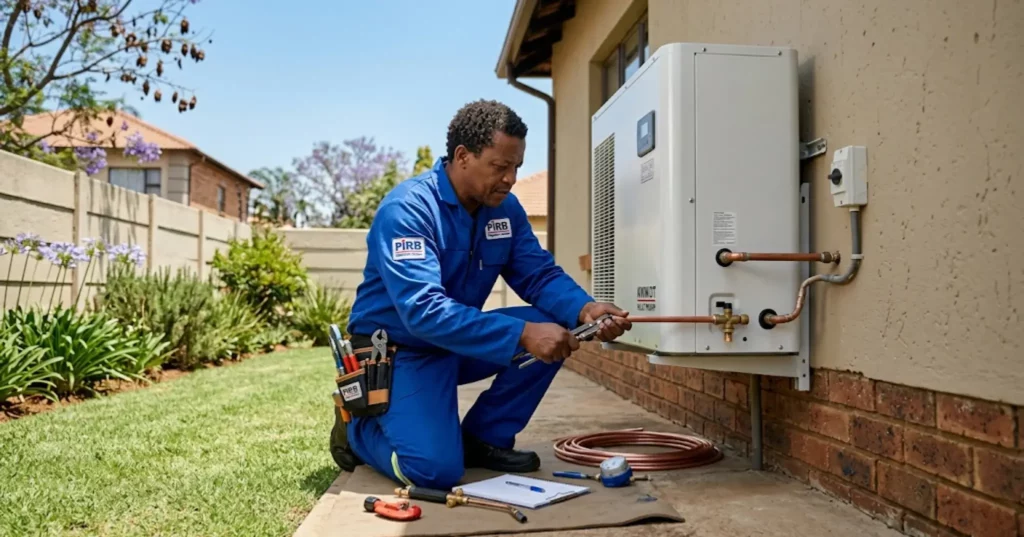
Ready to Upgrade Your Geyser System in Pretoria?
We install heat pumps, solar geysers, and standard electric geysers across Pretoria and Centurion. Every installation is PIRB registered and issued with a COC.
PIRB Registered | Heat pump and solar geyser specialists | Written quote before any work starts
The Pretoria-Specific Factors That Change the Calculation
Tshwane water shedding and element burnout
Every electric geyser in Pretoria is at risk of element burnout during Tshwane water outages if the correct protocol is not followed. The element runs dry as the tank empties during the outage and overheats when it has no water to transfer heat into. Solar geysers largely avoid this problem because the primary heating occurs through the roof panels, not through a submerged element. Heat pumps also significantly reduce this risk because the element is only the backup heating source and is rarely active during the day. For Pretoria homeowners who have experienced multiple geyser element failures in recent years, the switch to either a solar or heat pump system removes this failure mode almost entirely.
Highveld frost and winter performance
Pretoria winters bring cold nights and sub-10-degree mornings from June through August. An indirect solar geyser using a glycol heat-transfer fluid handles frost correctly. A direct solar geyser where water circulates through the roof panels is at risk of freezing damage if not correctly specified for the Highveld. When specifying a solar geyser in Pretoria, confirm with your installer that the system is an indirect configuration with freeze protection. A heat pump is entirely unaffected by frost on the roof since it draws heat from the ambient air, not from solar radiation.
Load shedding during Eskom Stage 2 and above
When load shedding removes power for 4 to 6 hours per day, all three systems are affected differently. The electric geyser simply stops heating for the duration of the outage and reheats when power returns, using a surge of electricity in the process. The solar geyser continues heating as long as the sun is shining, making it effectively immune to load shedding during daylight hours. The heat pump requires electricity to run its compressor, so load shedding cuts its operation. However, because a heat pump heats water to temperature in approximately 90 minutes with full power, a 4-hour outage during the day has minimal impact on hot water availability if the tank was fully heated before the outage.
For more detail on protecting any geyser system during water outages specifically, our guide on Tshwane water shedding and geyser protection covers the protocol that applies regardless of which system you have installed.
Which System is Right for Your Pretoria Household
Replace with electric if the geyser has burst unexpectedly, you need hot water within 24 hours, and your budget is limited. It remains the right call for urgent replacements.
Choose solar if you are investing in a wider renewable energy setup at the same time, have a suitable north-facing roof, and are comfortable with a 5 to 8 year payback period.
Choose a heat pump if you want the fastest payback, reliable year-round performance through Highveld winters, and a system that significantly reduces your exposure to both load shedding and Tshwane water shedding damage. For the majority of Pretoria households in 2026, the heat pump is the most practical upgrade.
All three system types are installed by our PIRB-registered geyser team across Pretoria and Centurion. Every installation includes a site assessment, a written quote, and a COC on completion. Pricing for all three systems is on our Pretoria plumbing prices page.

Get a Written Quote for Your Geyser Upgrade in Pretoria
We assess your property, confirm which system suits your roof, power setup, and household size, and issue a written quote before any work starts.
PIRB Registered | Electric, solar, and heat pump installations | COC on every installation | Pretoria, Centurion and Pretoria East
Frequently Asked Questions
Does a heat pump work during load shedding in Pretoria?
Not during the outage itself, since the compressor requires electricity. However, a heat pump heats a 150L tank to temperature in approximately 90 minutes. If you schedule the system to run before a known load shedding window using a timer or geyser controller, you will have a full tank of hot water that stays warm for 8 to 12 hours in an insulated geyser. For most Pretoria households on Stage 2, this means load shedding has very little impact on hot water availability.
Is a solar geyser worth it in Pretoria in 2026?
For most Pretoria homeowners replacing a single geyser, a heat pump offers a faster payback than a solar geyser and performs more consistently during Highveld winters. A solar geyser makes more sense if you are installing solar PV panels at the same time and want a fully integrated renewable energy setup. In that scenario, the combined investment provides better long-term value than either system alone.
Does installing a heat pump void my geyser warranty?
No, provided the installation is carried out by a PIRB-registered plumber and a COC is issued on completion. Heat pump water heaters sold in South Africa by brands including Kwikot, Geyserwise, and Poolstar carry their own warranties separate from the original electric geyser. The electric geyser warranty is typically replaced by the heat pump manufacturer’s warranty when the system is converted. Confirm the warranty terms with your installer before proceeding.


